Table of Contents
This post contains Amazon affiliate links. As an Amazon Associate, we earn from qualifying purchases, at no extra cost to you.
Resource guarding, a dog’s tendency to growl, stiffen, snap, or bite when someone approaches their food, toys, or other valued items, is one of the more serious behavior issues owners face, but it is also one of the most misunderstood. Guarding is not a sign of a “dominant” or “bad” dog. It is an anxiety-driven behavior rooted in a fear of losing something valuable, and it responds best to a calm, structured approach rather than confrontation.
What Resource Guarding Looks Like
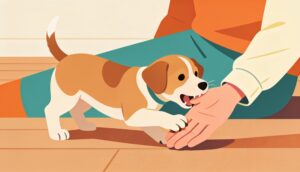
Guarding exists on a spectrum. On the mild end, a dog might simply eat faster or angle their body over the bowl when someone walks by. In the middle of the spectrum, a dog may freeze, give a hard stare, or growl. On the more serious end, a dog may snap or bite if a hand comes near their food or a stolen item. Every level is worth addressing early, since the behavior tends to escalate rather than resolve on its own if ignored.
Why Dogs Guard Food and Toys
Guarding usually stems from a genuine, if often irrational, fear that a valued item will be taken away. This can develop from competition with littermates, a history of scarce resources (common in some rescue backgrounds), or simply an individual temperament that places high value on possessions. Regardless of the cause, the training goal is the same: teach the dog that a person approaching their stuff predicts something good, not a loss.
Never Do This: Common Mistakes That Make It Worse
The instinctive human response, taking the item away to “show the dog who’s in charge” or punishing a growl, is almost always counterproductive. A growl is actually valuable information: it is the dog’s warning before a bite. Punishing the growl does not remove the underlying anxiety, it simply teaches the dog to skip the warning and go straight to snapping next time. The dog has not become calmer; it has become less predictable.
The Trade-Up Method
Instead of taking an item away, teach your dog that a person approaching means a trade for something even better is coming, not a loss. Approach at a distance your dog is still comfortable with, toss a higher-value treat near (not directly at) the dog, and walk away. Repeat often, gradually decreasing distance only as your dog stays relaxed. Over time this rewires the association from “a person near my stuff is a threat” to “a person near my stuff means good things happen.”
- Never approach and remove the item empty-handed during training.
- Always add something of equal or higher value rather than taking something away.
- Keep initial sessions short and end on a calm, successful note.
Hand-Feeding and Trust-Building Exercises
For food bowl guarding specifically, hand-feeding part of a meal, or dropping extra high-value pieces into the bowl while your dog eats, can build a strong association between your presence and the food increasing rather than disappearing. This should always be done at a distance the dog is comfortable with, never by forcing closeness that triggers stress.
When to Call a Professional
If your dog has ever bitten, guards around children, or shows guarding that seems to be escalating despite consistent training, it is time to bring in a certified professional dog trainer or veterinary behaviorist rather than continuing to manage it alone. Resource guarding around children in particular carries real safety risk and deserves hands-on, individualized guidance rather than general advice.