Table of Contents
This post contains Amazon affiliate links. As an Amazon Associate, we earn from qualifying purchases, at no extra cost to you.
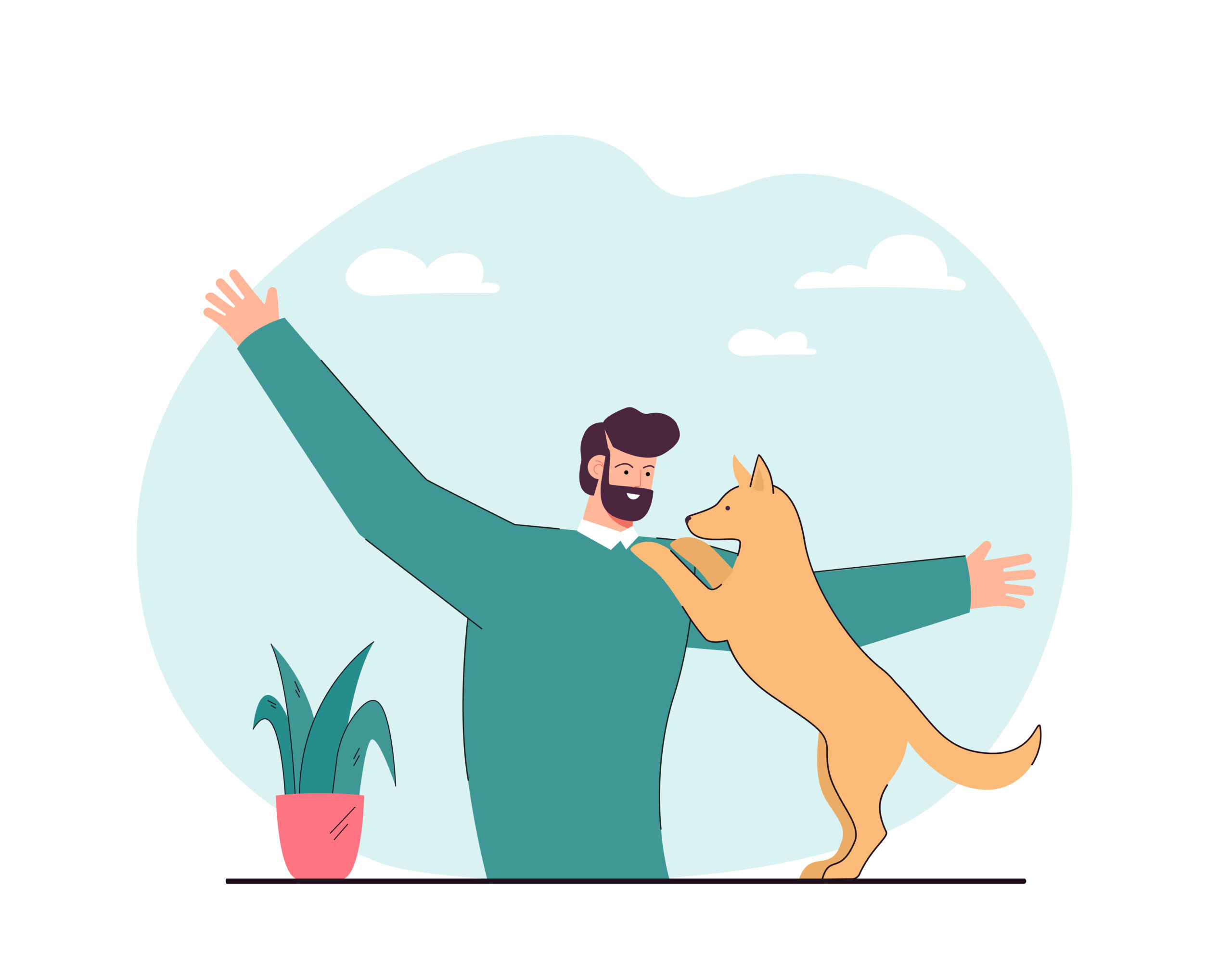
Jumping is one of the most common greeting behaviors in dogs, and also one of the most frustrating for guests who would rather not have muddy paw prints on their clothes. The good news is that jumping is almost always rooted in excitement rather than dominance, which means it responds very well to a clear, consistent training plan.
Why Dogs Jump on People
Dogs jump to get closer to a person’s face, since that is where the most interesting information and, often, the most attention comes from. If jumping has ever been met with petting, talking, or even pushing the dog away (which many dogs read as interaction rather than correction), the behavior has been accidentally reinforced. The fix is not to punish the jump, but to make sure only calm, four-paw greetings get rewarded with attention.
The “Four Paws on the Floor” Rule
The core rule for everyone in the household and every visitor is simple: no attention, no petting, and no eye contact while the dog has paws off the ground. The instant all four paws are on the floor, calm praise and attention can begin. This has to be applied consistently by every person the dog greets, since a single person who allows jumping can slow the whole process down significantly.
Managing Greetings at the Door
Door greetings tend to be the most difficult moment, since arrivals are naturally exciting. Before opening the door, ask your dog to sit or place them on a leash a few feet back. Open the door only when they are calm, and if they break position and rush forward, calmly reset and try again. This turns the door itself into a cue for calm behavior rather than a trigger for excitement.
Teaching an Incompatible Behavior
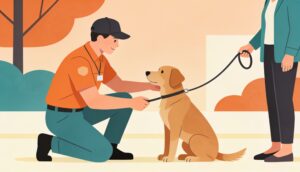
Rather than only removing attention for jumping, it helps to actively teach and reward a behavior that physically cannot happen at the same time as jumping, such as a sit or a hand target at the person’s side. Practice this daily in low-excitement moments so the behavior is strong before you ever ask for it during a real greeting.
- Practice “sit to greet” with familiar family members first, in a calm setting.
- Reward generously for the first few seconds of a sit near a person.
- Gradually add mild excitement, like a person walking in from another room, before testing it with real arrivals.
What to Ask Visitors to Do
Most jumping problems that seem to never improve are actually being reinforced by well-meaning guests. Before anyone new interacts with your dog, ask them directly to ignore jumping completely, turning away or stepping back rather than pushing the dog off, and to only greet once all four paws are down. A short, clear instruction to guests makes a bigger difference than almost anything else in this process.
Consistency Across the Whole Household
Jumping training fails most often when one household member enforces the rule and another allows it “just this once.” Dogs are quick to learn which people and which situations still reward jumping. Sit down with everyone in the home, agree on the same rule, and apply it every single greeting. Most dogs show real improvement within one to two weeks of fully consistent handling.