
Table of Contents
This post contains Amazon affiliate links. As an Amazon Associate, we earn from qualifying purchases, at no extra cost to you.
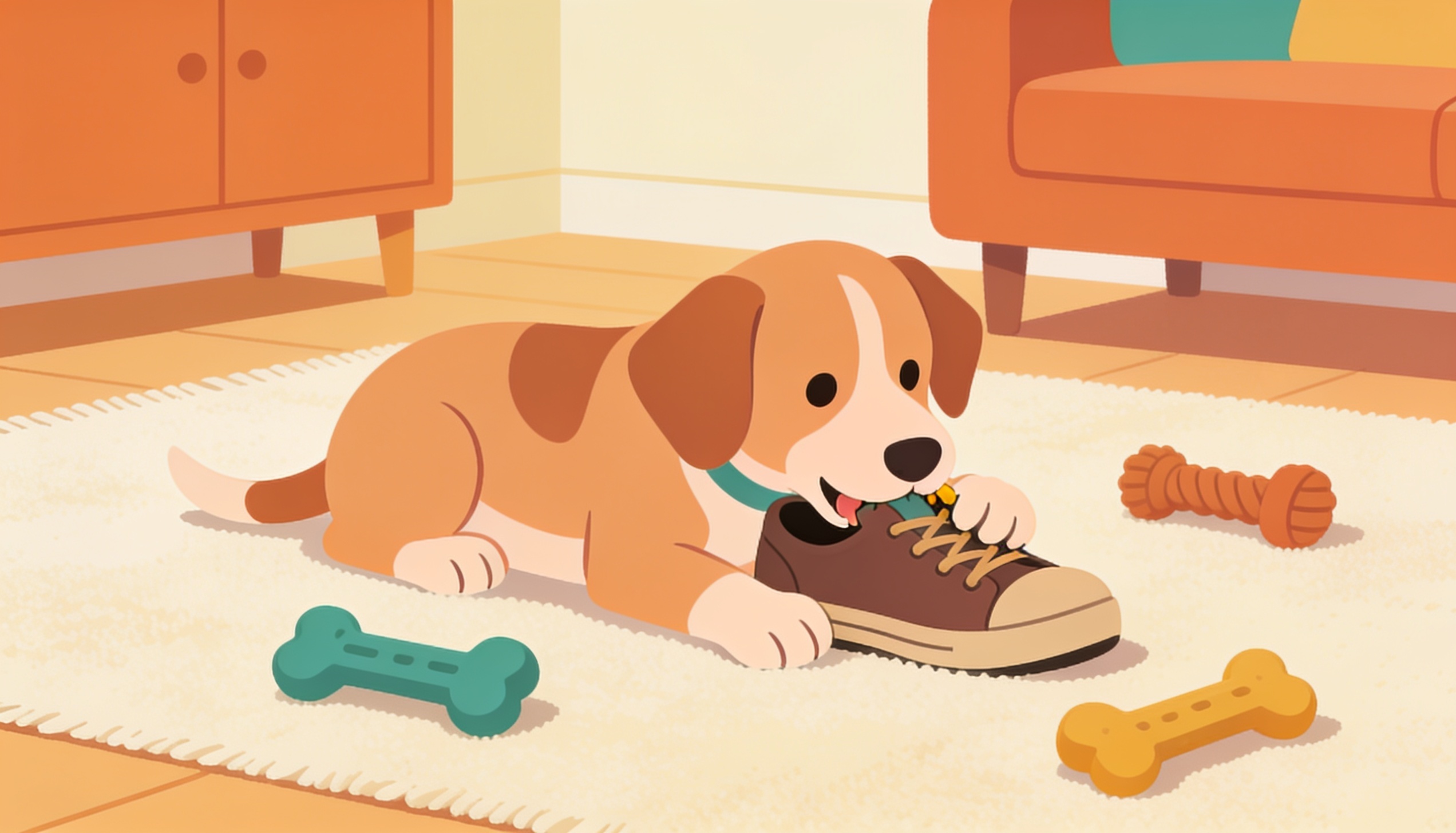
Chewing is one of the most natural behaviors a dog has, but that doesn’t make it any less frustrating when your favorite shoes or the corner of the couch become the target. The right fix depends heavily on your dog’s age, since puppies, adolescents, and adult dogs chew for different reasons.

Puppies (2 to 8 Months)
Puppies chew because they’re teething and because they’re exploring the world with their mouths. This is normal and largely unavoidable. The goal isn’t to stop chewing entirely but to redirect it. Provide a variety of textures in chew toys, rotate them weekly to keep interest high, and supervise closely or use a crate when you can’t watch your puppy directly.
Adolescents (8 Months to 2 Years)
This is often the peak age for destructive chewing, driven by boredom, excess energy, and mild anxiety as dogs go through a second, less intense teething phase. Increase daily exercise, add food puzzles to meal times, and keep valuable items out of reach until impulse control improves.
Adult Dogs
Chewing in a fully grown dog that previously didn’t chew is worth paying attention to. It can signal boredom, separation anxiety, or in rare cases a medical issue like nutritional deficiency. Rule out anxiety first, since anxious chewing is usually focused on exits like doors and windows.
Universal Solutions That Work at Any Age
Redirect, don’t just scold. If you catch your dog chewing something off-limits, calmly swap it for an appropriate chew toy instead of just yelling. Keep a rotating supply of chew toys with different textures: rope, rubber, and rawhide alternatives all appeal to different preferences. Dog-proof your space by keeping shoes, cords, and remotes out of reach, and use taste deterrent sprays on furniture legs if needed.
The Bottom Line
Chewing is rarely about spite. Match your response to your dog’s age and energy level, and most chewing problems improve significantly within a few weeks of consistent redirection.